Engineer / Researcher / Founder
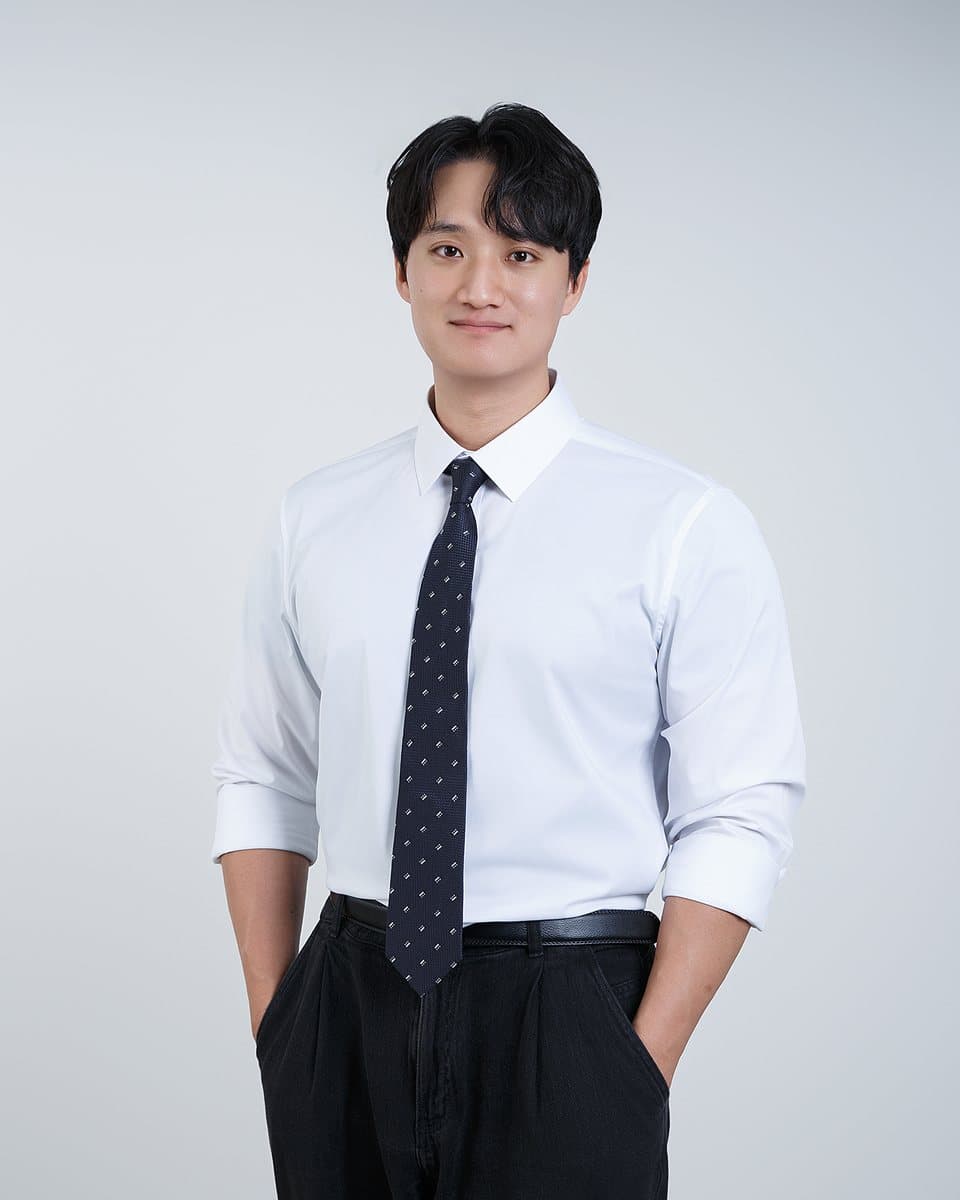
SANGWANKIM
I build AI agents that study people: they watch what people do, ask why, and notice when words and actions disagree.
- Prospective PhD student, Human–AI Interaction · Fall 2027
- Founder & CEO, Usercase (EarningBirds Inc.)
- B.Eng. Civil + Mechanical, SKKU, summa cum laude
Builds the whole system
Arduino test rigs, a HoloLens app built alone, a production AI research platform.
Tests it on real people
A 50-user live-product study, ~1,200 sessions, 100+ discovery interviews.
Redesigns from evidence
Rebuilt the AI moderator when what users said diverged from what they did.
Research interests
How can AI agents study people faithfully: asking from what people actually do, and knowing when a simulated person can stand in for a real one?
- 01
AI interviewers grounded in behavior
Follow-up questions built from what a person just did, not only from what they report; when to step in, and how to ask without leading.
Evidence: Usercase
- 02
Simulating people with agents
Agents built from a person's own interview; measuring where they answer like the real person and where they drift.
Evidence: Dalm · willu
- 03
Where it started: sensing the physical world
Comparing design with as-built structures through vision, 3D scans and AR: measuring the gap between a model and reality, and showing its error honestly.
Evidence: HoloLens · crack detection
KeywordsHuman–AI Interaction · AI-moderated interviews · Generative agents · Simulations of people · Behavioral data vs. self-report · Human-in-the-loop systems · Spatial computing · Civil × Mechanical × AI
Lab
Three systems, running in the browserTimeline
2016 – now2026
Recent AI work · 2026, alongside Usercase
Built with AI coding agents. Each one tests a question about how people and AI agents work together, and each left a note.
Dalm
Open ↗Stanford's generative-agent interview method, adapted to Korean: an AI interviewer runs a life-story interview, then builds an agent that answers like you.
LearnedLong interviews stayed on protocol only when the script lived in code and the model decided just the follow-ups.
willu
Open ↗A voice interview builds your AI twin; twins go on simulated dates with other twins to suggest matches.
LearnedWhen one model wrote both people, simulated dates barely separated good pairs from poor ones (55% vs. 49%). That pushed the design toward an independent agent per person.
Pizza Panic
Open ↗A game for kids where the AI assistant is confidently wrong once, so they learn to check it.
LearnedThree versions differ only in the hidden cause, so a player improves by checking the AI, not by memorizing answers.
Ringo
Open ↗Real situations where only English works; AI characters adapt to the learner every turn.
LearnedOne example sentence in the prompt was copied by all four characters, and banning questions made them passive. Change one thing, then simulate.
Sori
Open ↗Picture books for Korean-heritage children: reading a line aloud opens the next scene, judged by live speech recognition.
LearnedRecognition that waited for a pause made readers stop mid-sentence; continuous transcription with lenient matching fixed it.
Field notes
- Example phrases in a prompt become the common prefix of every output. Give rules, not examples.
- Ask a model to vary its output and it repeats itself. Roll the dice in code and hand it one choice.
2025
Usercase: an AI that asks when behavior and words disagree
Founder & CEO, EarningBirds Inc. · Sep 2025–now
An AI user-research platform that links what people do inside a product with AI-moderated interviews. Led a team of up to five and co-built the platform.
▶ System 02 in the lab2022–25
Selected for startup programs
KOSME Youth Startup Academy (Outstanding Startup Award) · KODIT Start-up NEST · Smilegate Orange Planet · 500 Global Founders Retreat
2022–24
Three early ventures after graduation
Founder or co-developer
A VR app, an information-aggregation product, and an automated trading system.
2022
B.Eng. Civil + Mechanical, Sungkyunkwan University
Graduated summa cum laude · GPA 4.03 / 4.50 (95.3 / 100)
2020–22
A HoloLens app that shows where the slab should go
Structural Health Monitoring Lab, SKKU · built alone
Scanned full-scale precast slabs, compared them with the design, and overlaid the model in the worker's view. The visualization worked; tracking drift limited precision.
▶ System 01 in the labCrack detection, point clouds and a hybrid test rig
Undergraduate researcher · Prof. Sung Han Sim
MATLAB pipelines compared across imaging conditions, depth checks on 3D scans, and a computer model driving an Arduino stepper rig.
▶ System 03 in the labPresidential Scholarship, KOSAF
2020–21